Last night the West Fargo City Commission had additional discussion related to a 3-2 vote to purchase 5 homes on (or adjacent to) Sheyenne Street in our last Commission meeting of 2020. This topic has certainly gotten the attention of many West Fargo residents who are questioning various aspects of this decision. I wanted to put my thoughts together on why I strongly support moving forward with this idea.
First a couple quick items to get out of the way.
- My support of this decision had nothing to do with solving a problem for those 5 property owners or the temporary need for parking during our 2021 construction project. Those are inconsequential details in my decision.
- If your stance is the city should NEVER incentivize development, my argument isn’t going to change your mind and I can appreciate your perspective.
- If you believe the process the city went through was flawed or wrong I can again appreciate your perspective. There is room for improvement.
My support comes from the fact that this will have a positive impact to property taxpayers versus the city’s normal incentive of a Tax Increment Finance (TIF) district that is put on the backs of property taxpayers. Let me explain.
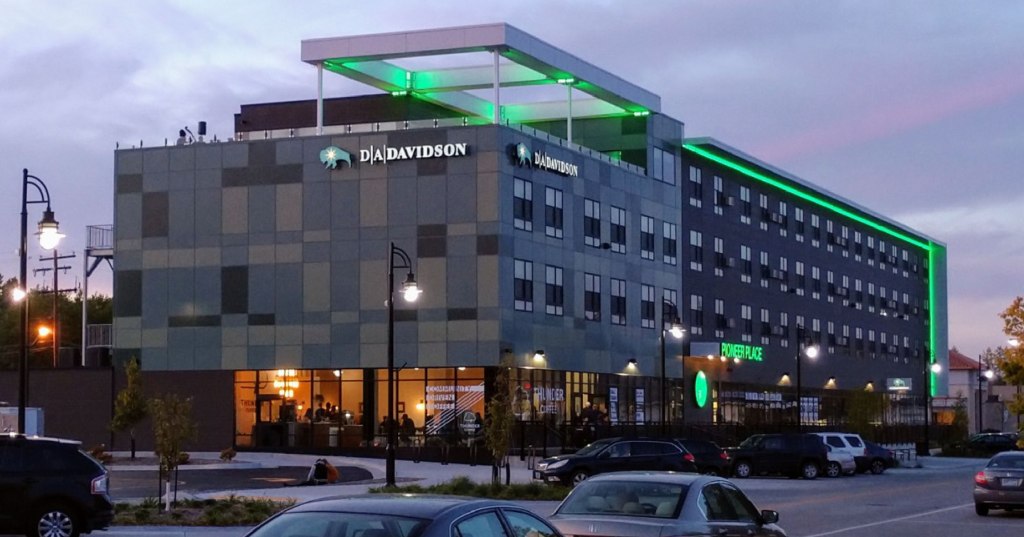
My view is that our efforts to redevelop downtown (the Yards) has required and is going to require investment by the city to make it happen. That said, I generally dislike the use of TIF districts because of the impact to taxpayers. I’ve voted against as many as I have voted for in my term as Commissioner. As an example, I voted against the $5m in public funds that the commission approved in early 2020 for the future Bell Tower project. Coincidentally, that is the property directly to the north of the 5 homes that we are talking about and almost the identical amount of land.
Here is a brief overview of what a TIF district does and I used this example last night in our commission meeting. If we look at the Lights project on the southside of town. The city created a TIF district that was approximately 15 or 16 million dollars that will be paid off over the next 25 to 30 years. That means the city provided upfront money (15 – 16 million) and is paying itself back from the property taxes from those buildings.
So, in a TIF district the city and schools effectively get zero property tax to pay for city and school operations/services for that time period. The problem is that the city (and schools) will provide services such as police and fire protection to those properties for that time period and the proportional cost they should be paying, for those services, will be put on the backs of every other property taxpayer in West Fargo. You are being asked to pay more than your fair share of property taxes with every TIF the city passes.
Now, let’s look at what we are trying to do with these 5 homes. Instead of borrowing from future property taxes we are pulling funds that are already there. Those funds were put there with the voter approved sales tax to fund economic development and infrastructure. Incentivizing development is economic development. I strongly support using the money voters approved for economic development versus a TIF which simply increases taxes for everyone else.
A large percentage of the sales tax funds I am referring to come from people outside our community. Think of how many people shop at Costco or Menards from outside of West Fargo. Let me rephrase that…the $1.5 million we are spending includes a LOT of money that isn’t from WF taxpayers. How great is that? Fargo shoppers are paying for our economic development.
Finally, when that property (a few years down the road) is developed the property taxes will come into the city and school coffers from day 1. If the future property is valued higher than the current 5 homes it will help to keep property taxes lower (than a comparable TIF) for all taxpayers because of the higher value and the fact we didn’t borrow from future property tax. This could be a game changing and property-tax-lowering form of incentivization.
Some residents are making the argument that this is speculation. I suppose they are right, but we must dig deeper into that comment before writing off an otherwise better way of incentivizing development. The city has ‘speculated’ on a lot of other property purchases, so this isn’t something new. As an example, the city owns the land that the former VFW sat on and was involved with that property purchase. The city also played a part in the land expense related to Costco. This is not unchartered territory; it’s economic development.
What is more speculative and riskier; buying 5 properties and owning the land or simply handing over money as part of a TIF district and not owning anything for it. The land the city is buying will never be worthless even if we change our minds down the road. The money thrown out in a TIF district never comes back to us in any direct form (not at least until the TIF is done). Speculation is part of economic development and any incentive we hand out.
Like I said to start, if you are 100% opposed to economic development incentives, I’m not going to change your mind. However, if you see the validity of using incentives to drive future projects and increase city revenues (which can lower your taxes) it is a worthwhile approach. It accomplishes this goal without putting the burden of doing so on our property taxpayers and using the funds that voters approved for this type of activity.
BTW…I love the Lights…just not the TIF that went with it.
 Eric GjerdeviG
Leave a comment